New Weil McLain GV90+5

We moved into an old 1890’s home last January, it was an old 60+ year old oil boiler, and we finally switched to a natural gas GV90 boiler in the fall. So far so good for the most part, I replaced a couple radiator shut off valves due to them leaking.
Our issue currently is the 3rd floor. It’s a smaller radiator, but it doesn’t get hot. I would say the hottest it gets is 80-90 degrees if that even. The space is always cold. I believe the radiator is undersized for the room and the insulation I’m pretty sure lacks. My question is I check the temps at my radiators downstairs and they only get to 115 degrees, I feel like this is a little low and that could be why it’s not getting hot enough for the third floor?
My boiler temp is set to 180. They are all cast iron radiators
Comments
-
This is a hot water boiler and therefore the hot water must get all the way up to that radiator. If there is mostly air in that radiator, the radiator will not heat up.
In order to get the water up that high in the system you need what is called static pressure. That is the pressure of the water in the boiler room on the boiler gauge. If, for example, you have only 10 PSI pressure on the boiler gauge in the basement, then you will get water in the radiators up to about 23 feet above the boiler gauge. If the problem radiator in the attic is 26 feet above the boiler gauge, you will never get any water up that high to fill that radiator.
We need more informatiopn to help you. Can you post a picture of the problem radiator, and a picture of the gauge on the boiler? Can you also post a photo of the piping around the boiler from floor to ceiling from several angles so we can see the near boiler piping?
Edward Young Retired
After you make that expensive repair and you still have the same problem, What will you check next?
0 -
that makes sense. It looks like my pressure was a bit off. It was reading 18psi hot so I bumped it up to 20 and I’ll see if that fixes it at all. Even the first floor radiators only get to 115 degrees. Shouldn’t they get hotter than that?
0 -
Raising the pressure is not the only thing you need to do. 18 PSI should be enough to get the water up that high. now you need to get the air out. That is why i wanted a photo of the radiator. there should be a vent on the top of each radiator that you open with a key or a screw driver that will allow the air to vent out. Once you get water to come out, then the radiator is full. You start the process at the lowest rariators like the first floor. if you don't get any air, but you get water right away, then you dont' have an air problem.
Do you have the radiator key? Some older air vent valves don't have a screw driver slot. Go from one radiator on the first floor to the next while someone in the basement keeps an eye on the pressure gauge. If the pressure drops below 12 PSI, the add more water to get the pressure back up to 15 PSI or 18 PSI. As you let air out, the pressure will drop. if you have an suto feed valve on the new boiler that valve will automatically add water to keep the pressure at a minimum pressure to get all the air out.
once you are finished on the first floor, then move to the second floor and vent all those radiators. After the second floor radiators are air free, then go to the top floor and vent the air out of that radiator. This should have been done by the installer of the new boiler.
ALSO: If the new boiler was properly installed, the system should be self purging. That is the air should eliminate itself while the boiler operates after the first filling and venting. If you are getting air in the radiators during operation after filling and venting then the boiler piping was done wrong.
Edward Young Retired
After you make that expensive repair and you still have the same problem, What will you check next?
0 -
sorry I missed that part, yes everything was bled multiple times to make sure all air is out.
0 -
@Ghynes440 it is normal for cast-iron radiators on a hot water heating system to run relatively cool unless the system is working hard to catch up from a deep temperature setback or the weather is extremely cold. This works in your favor because the heat will have less tendency to stratify near the ceiling. It also means that your boiler will run more efficiently because of the larger temperature difference between flame and circulating water.
However, that third floor radiator should be about the same temperature as the others. The suggestions above will help you get it there.
—
Bburd0 -
What's the Economy dial set to?
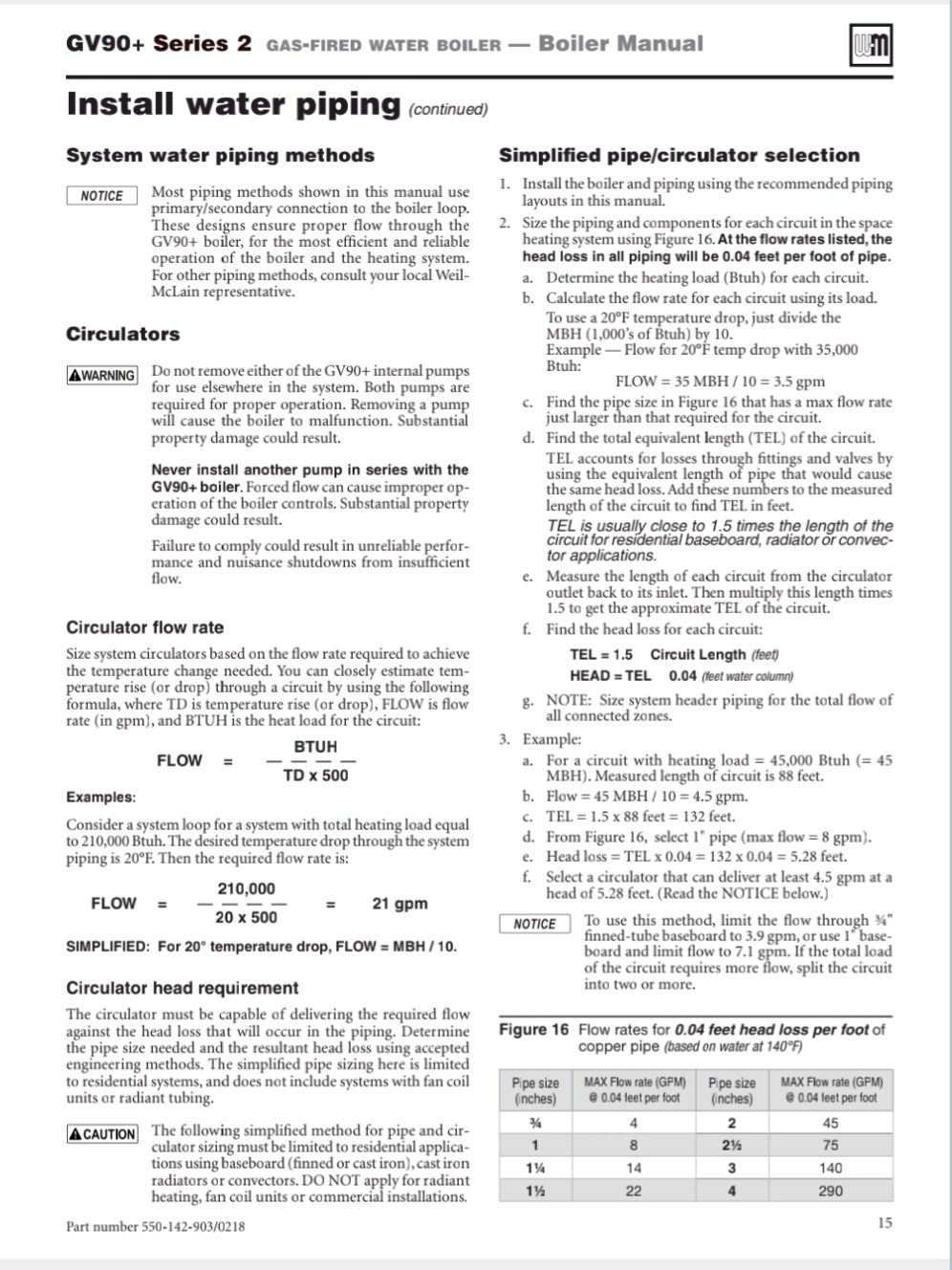
Is it piped Primary/Secondary? What circulator is being used on the secondary loop?
 0
0 -
doesn’t that boiler have a built in primary secondary piping? If so you may not have 180 going out to the system just because the boiler reads 180as @HVACNUT eludes to
Measure the temperature leaving the boiler room to that rad
Bob "hot rod" Rohr
trainer for Caleffi NA
Living the hydronic dream0 -
You may have orifice plates on the top floor radiator valves
In this article Dan explains that top floor radiators on gravity systems often had orifice plates inserted into the valve connection union:
Q: So the top floors tend to heat more quickly than the bottom floors in a gravity system?
A: Yes, and that leads to system imbalance..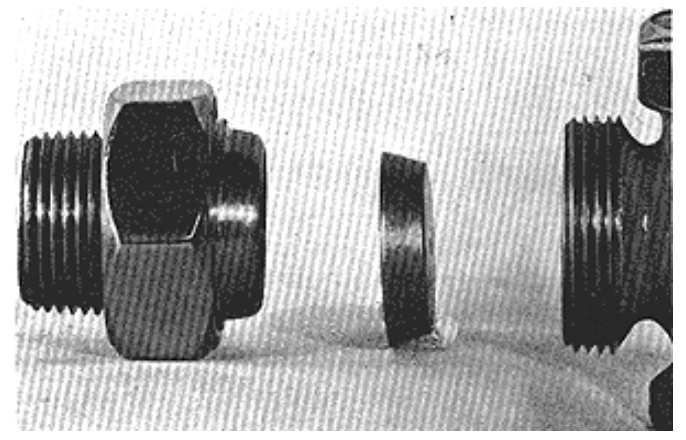
Q: How did the old-timers get around this problem? They sometimes added orifice plates to the top-floor radiator hand valves. Here's what one looks like
Q: What exactly is an orifice plate?
A: It's a round piece of metal with a small hole drilled through its center. You could make one yourself out of sheet metal; most of the old-timers made their own.Q: How did the orifice plate direct the water?
A: By increasing the resistance through the radiator it was assigned to. If water found it difficult to enter, say, a top-floor radiator because of the orifice plate, it would go to a radiator on a lower floor instead. In this sense, the orifice plate was similar to the "O-S" and "Monoflo" fitting. The big difference, however, was that instead of directing the water into the radiator it was assigned to, an orifice plate directed the water away from that radiator.In another article Dan poses the problem with these orifice plates when converting to a system to use a circulator. Now the circulator pump will force the water thru the shortest circuits which are on the first floor, causing the first floor to overheat and the top floor to get less flow. Now with those orifice plates restricting those radiators, you barely get any heat thru those circuits. His suggestion is to remove the top floor orifice plates and install the orifice plates on the first floor radiators. With gravity the top floor overheats, with a pumped system the bottom floor overheats, so the orifice plates need to be on the overheating radiators.
Edward Young Retired
After you make that expensive repair and you still have the same problem, What will you check next?
0



Categories
- All Categories
- 87.8K THE MAIN WALL
- 3.3K A-C, Heat Pumps & Refrigeration
- 59 Biomass
- 430 Carbon Monoxide Awareness
- 132 Chimneys & Flues
- 2.2K Domestic Hot Water
- 6K Gas Heating
- 124 Geothermal
- 170 Indoor-Air Quality
- 3.8K Oil Heating
- 79 Pipe Deterioration
- 1.1K Plumbing
- 6.7K Radiant Heating
- 396 Solar
- 16.1K Strictly Steam
- 3.5K Thermostats and Controls
- 56 Water Quality
- 51 Industry Classes
- 51 Job Opportunities
- 18 Recall Announcements