Condensate leak

Hello all,
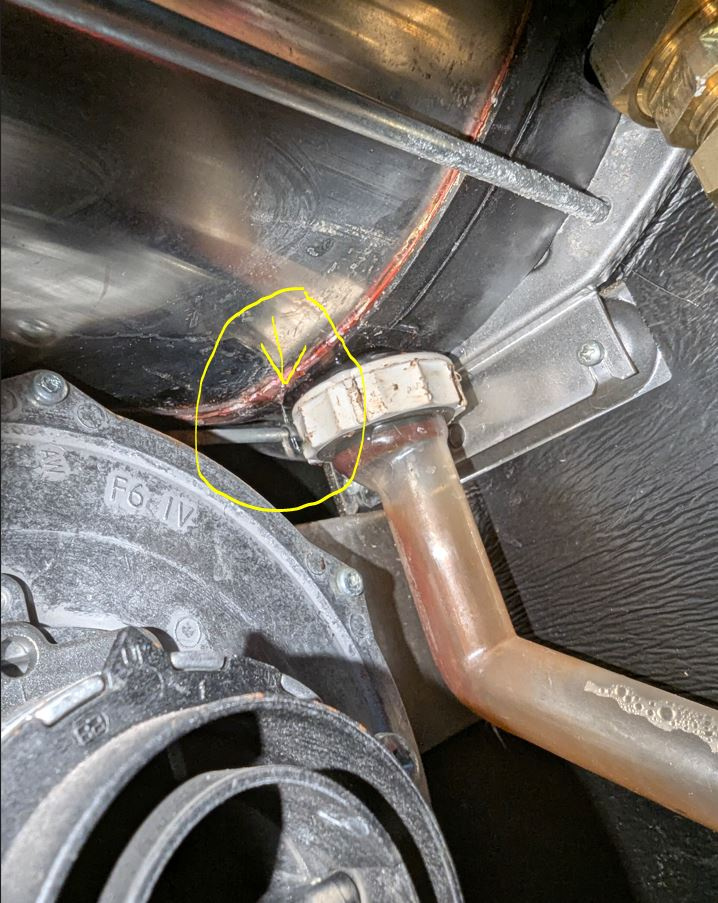
I have a Weil Mclain AB-155H that is around 5 years old and has been running great except for a burned up capacitor on the main board about a year ago. This year when I opened the boiler to do the annual combustion chamber cleaning, I noticed that it is leaking condensate from the joint at the rear of the heat exchanger where stainless meets plastic, quite close to the actual condensate drain. The drip is visible in the picture. It looks like the joint should separate allowing me to clean it out and apply new sealant if I remove the heat exchanger from the boiler. Or I can simply clean up the joint the best I can from the outside and apply a nice bead along that joint. Can anyone recommend either course of action, or what type of sealant I should use. I was thinking of using a high temperature RTV sealant. I would love to hear suggestions from the community.
Thank you!
David
Comments
-
Is it the heat exchanger that is actually leaking or the condensate hose connection?
0 -
A very good question ^^^^^^ . And if that white plastic nut is not cracked? Take it apart, clean it, and add some pipe dope to the threads and the mating surface. Just a small amount and tighten by hand. Come to think of it, try tightening the white nut by hand first.
0 -
Thank you for your responses, and sorry I did not include this in my first post. I have removed and cleaned out the condensate drain assembly and I can confirm it is not leaking from the white nut. I had this thought originally too. After cleaning the condensate drain and reassembling, I fired up the boiler with a paper towel wrapped around the white nut. The condensate started dripping from the line where the stainless meets the black plastic, and the paper towel was still dry. I will take your advise and use some pipe dope on the white nut, just to be even more certain. Do you think high temp RTV silicone is the way to go to seal this up?
0 -
My guess is that you will find a fiber washer there under the nut. You might need a new one, but it might seal with just some pipe dope added to the washer.
8.33 lbs./gal. x 60 min./hr. x 20°ΔT = 10,000 BTU's/hour
Two btu per sq ft for degree difference for a slab0 -
Just to update anyone who might be interested, or if anyone runs into this issue in the future…
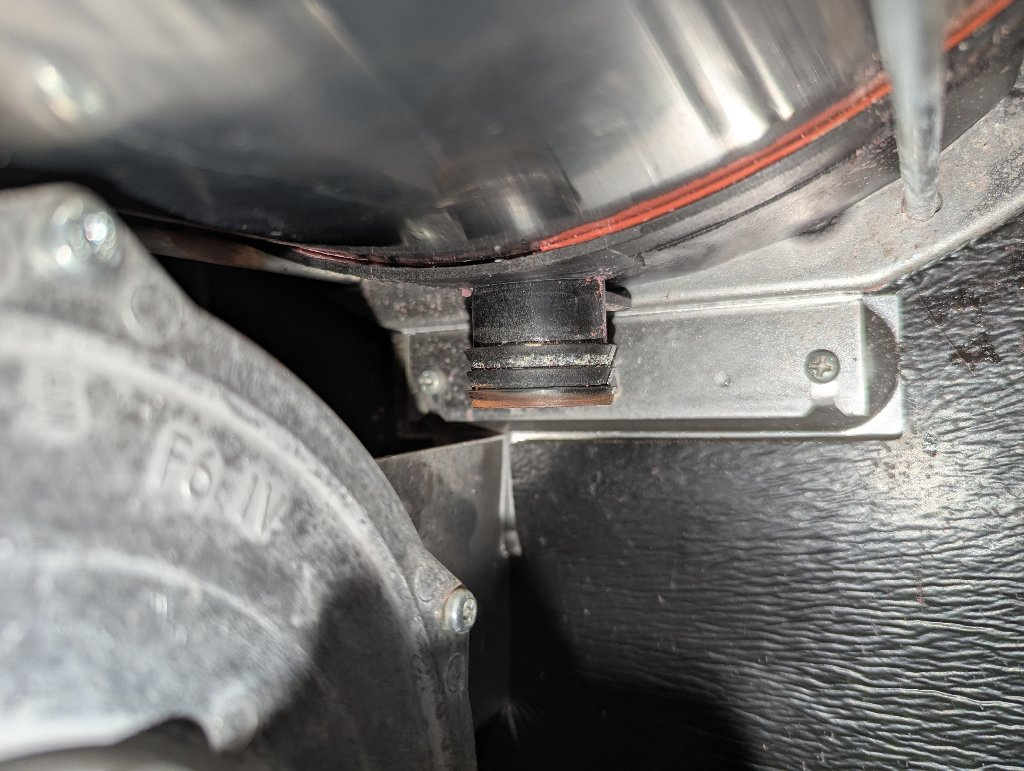
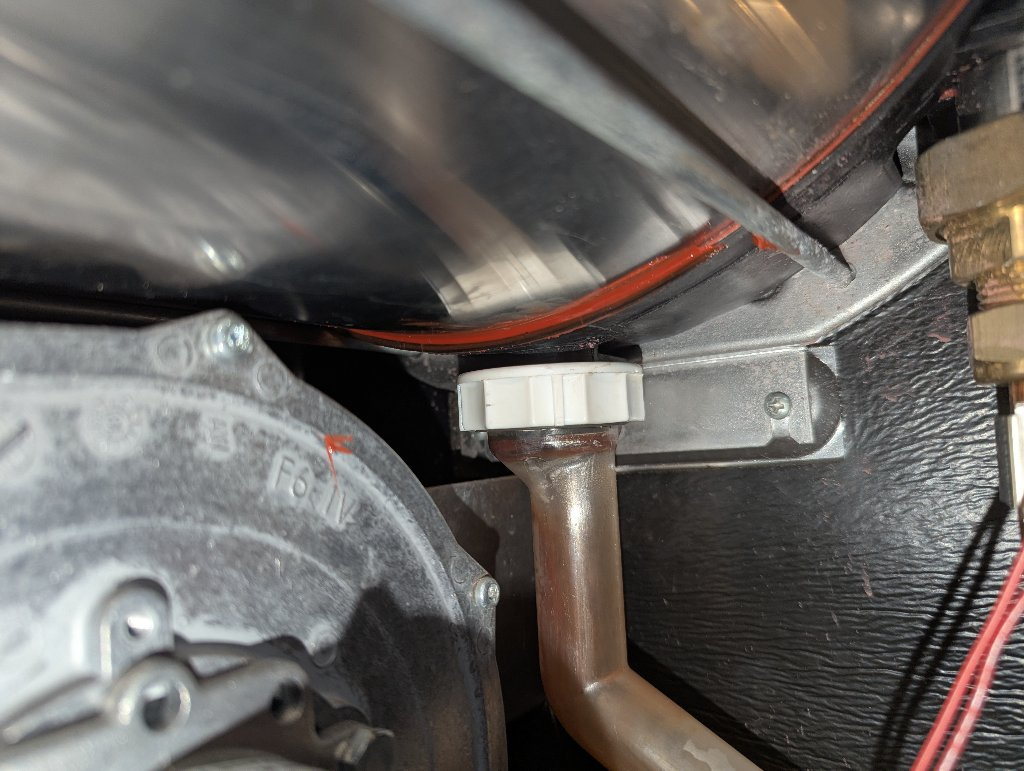
My boiler was in fact leaking condensate from the joint between the stainless steel primary heat exchanger enclosure and the plastic secondary heat exchanger. After I cleaned the joint up really well, you can see that the gasket is completely gone in the few inches at the bottom of the joint. Whatever material they used for the gasket must not be able to handle the acidity of the condensate. I cleaned the joint up really well and applied a bead of high temp RTV silicone, being careful to get the RTV into the gap as deep as I could. I let the RTV cure for around 12 hours and fired the boiler back up. That was about 3 days ago and the boiler is still bone dry. The manufacturer shows the heat exchanger as one complete assembly, so I don't think I can buy this gasket, but I am not certain I would want to either way. I will be keeping a close eye on this going forward, and I may go back and RTV around the entire joint at some point.
Thank you again to everyone who commented…
 0
0 -
The RTV repair is probably better than the gasket provided by the manufacturer. Nice repair, thanks for sharing.
0 -
@David_Chandler ty for letting us know.
0



Categories
- All Categories
- 87.8K THE MAIN WALL
- 3.3K A-C, Heat Pumps & Refrigeration
- 59 Biomass
- 430 Carbon Monoxide Awareness
- 133 Chimneys & Flues
- 2.2K Domestic Hot Water
- 6K Gas Heating
- 124 Geothermal
- 170 Indoor-Air Quality
- 3.8K Oil Heating
- 79 Pipe Deterioration
- 1.1K Plumbing
- 6.7K Radiant Heating
- 396 Solar
- 16.1K Strictly Steam
- 3.5K Thermostats and Controls
- 56 Water Quality
- 51 Industry Classes
- 51 Job Opportunities
- 18 Recall Announcements