Diagnosing Sudden Pressure Spikes in a Hi-Rise Condo

Comments
-
Hi, I hope one of you guys checks back in. I live in a hi rise condo in Atlanta and I know very little about plumbing. I installed a Moen flo about 4 years ago. The turbine stopped working a year ago, but I couldn't get a plumber to replace it ..and I forgot about it. A few days ago I started getting the small drip issue. Started trouble shooting by turning off the toilets. Within a few hours I got a high pressure alert. Really high. My normal for 4 years is 76psi. Now I'm at 94psi. Moen recs no higher than 80psi. Of course it's 1 am, so all I did was turn the water in toilets back on, report it to the building and start reading. I'm learning a lot about condo plumbing. I don't see a thermal expansion tank. Don't know if I have a pressure regulator valve. My electric traditional water heater is from 2019. Moen installed probably 2021. We have central water system. Learning it could my my equip, or my building equip...which has had issues or the city of Atlanta which is quite questionable. Calling the installing plumbing co at 6. These are the guys who dodged the turbine replacement request. Any advice?
Update: I do have a prv on main line before Moen flo (Google lens is a blessing)
Update: at 6 am, my pressure is back to normal 76psi, but my micro leak is back.
My summary: hi water pressure comes into my unit, and the micro leaks are a way to relieve the pressure. When I closed the water on 2 of my 3 toilets, the pressure built to a very high psi. 94 psi. Took 5 hours. And took about the same for pressure to go back to 76 psi when I opened the water to the toilets. Now what do I do?
0 -
how tall is your building? If pressure in the city mains is low there may be a booster pump in the building? They can cause small, occasional pressure spikes
On high rise there will be pressure reducing valves generally every 6 stories, or some buildings use prvs in every unit instead
It would be good to check and record pressure up stream of your prv
A typical PRV works at a 3-1 ratio maximum, 2-1 ideally. 45-60 is a typical pressure range in residential use. 76 is pretty high. If it increases it could be a bad prv or a thermal expansion issue
We supply many high rise projects in Florida, some of these require two stage prv to reduce 230 psi booster pump pressures to 60.
There are also piston style prvs which hand pressure spikes better
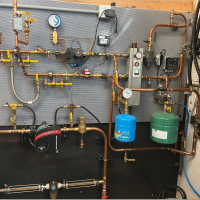
An example of a two stage with piston style prv and diaphragm style
Bob "hot rod" Rohr
trainer for Caleffi NA
Living the hydronic dream0 -
@suealex, welcome to Heating Help. I've created a new discussion for you here to prevent confusion and your post from getting lost at the bottom of an older thread. Thanks.
Forum Moderator
0


Categories
- All Categories
- 87.8K THE MAIN WALL
- 3.3K A-C, Heat Pumps & Refrigeration
- 59 Biomass
- 430 Carbon Monoxide Awareness
- 133 Chimneys & Flues
- 2.2K Domestic Hot Water
- 6K Gas Heating
- 124 Geothermal
- 170 Indoor-Air Quality
- 3.8K Oil Heating
- 79 Pipe Deterioration
- 1.1K Plumbing
- 6.7K Radiant Heating
- 396 Solar
- 16.1K Strictly Steam
- 3.5K Thermostats and Controls
- 56 Water Quality
- 51 Industry Classes
- 51 Job Opportunities
- 18 Recall Announcements