Intermittent Burner ignition

I have an oil fired, hot air heating system.
My Nest Thermostat reported that there were 11 instances the last month where the temperature fell while the system was in the heating cycle, indicating that the burner did not activate.
Burner ignition appears to be intermittent when thermostat calls for heat, Can hear a click at the furnace when increasing the thermostat setting but system does not always start until giving the control card box a light tap. Once it's started it runs fine and shuts down based on the temperature setting but may or may not activate on the next heating cycle.
Checked the wiring connections at and around the control card and everything looks OK.
Can the control card cause intermittent failures?
Comments
-
Someone here will suggest trying a different T-stat other than the Nest.
0 -
Nest is a funny thermostat. There are no actual switched contacts inside the thermostat like the other thermostat you had before. The switching action actua;;ly happens electronically with a triac and other electronic devices that changes resistance from high resstance (off) to low resistance (on). with some electronic control boards that come with furnaces these days, that type of switching action has some flaws. When the thermostat calls for heat the Low resistance switching circuit may not actually get low enough every time to pull in the heat relay on the furnace control card.
@JUGHNE may have the Best idea. Try the Resideo/Honeywell T9, or the Ecobee WiFi thermostat, or some other brand of smart thermostat
If you are stuck on using the NEST for other reasons, you can try an isolation relay. Ask me how if you are interested in the setup
Edward Young Retired
After you make that expensive repair and you still have the same problem, What will you check next?
0 -
I started having the problem this year with an old LUX PSP511A thermostat before switching to the Nest.
The Nest only highlighted how frequently the problem occurs.omec
 1
1 -
If you have to tap the 'control card box' (whatever that is) you have to trouble shoot that.
0 -
if it is clicking at the furnace the t-stat is probably calling for heat. probably either a control that isn't responding or it is already locked out from a failed ignition attempt so either an igniter or flame proving problem.
0 -
So banging on the side of the furnace will get the burner to start. This sounds like insufficient voltage to pull in the relay but once the relay is pulled in, it operates properly. And after that it may pull in just fine for several attempts until one time when the relay fails to pull in. This does not sound like a primary control ignition failure because you do not mention that any reset button needs to be pressed. The relay I ‘m referringto is the one on the “Control Card Box”
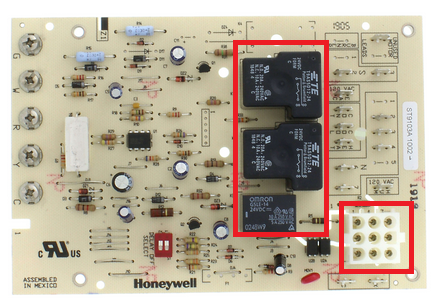
I might say that the Control Card Box is more than likely an electronic fan timer for oil heat like the ST9103A made by Resideo/Honeywell. Can you verify that? Sometimes those fan timer boards have a problem with solder joints on the back of the board and can be easily repaired if you are comfortable with soldering on a PCB. If not then the only remedy is to replace the ST9103A
To verify the problem is the PCB, you need to carefully remove the furnace cover (usually the blower compartment cover) and using a delicate hand connect the thermostat wire from R to W on the board. If the burner starts as a result of a direct jump connection then the control is not the problem. If the jumper connection fails to start the burner then the control board is the problem and needs to be repaired or replaced.
The instruction in Italics is easier said than done
Mr. Ed
PS, I do not recall that the NEST thermostat was ever a problem on the furnaces that use the ST9103A Electronic Fan Timer
Edward Young Retired
After you make that expensive repair and you still have the same problem, What will you check next?
 1
1 -
Does the control look something like this?
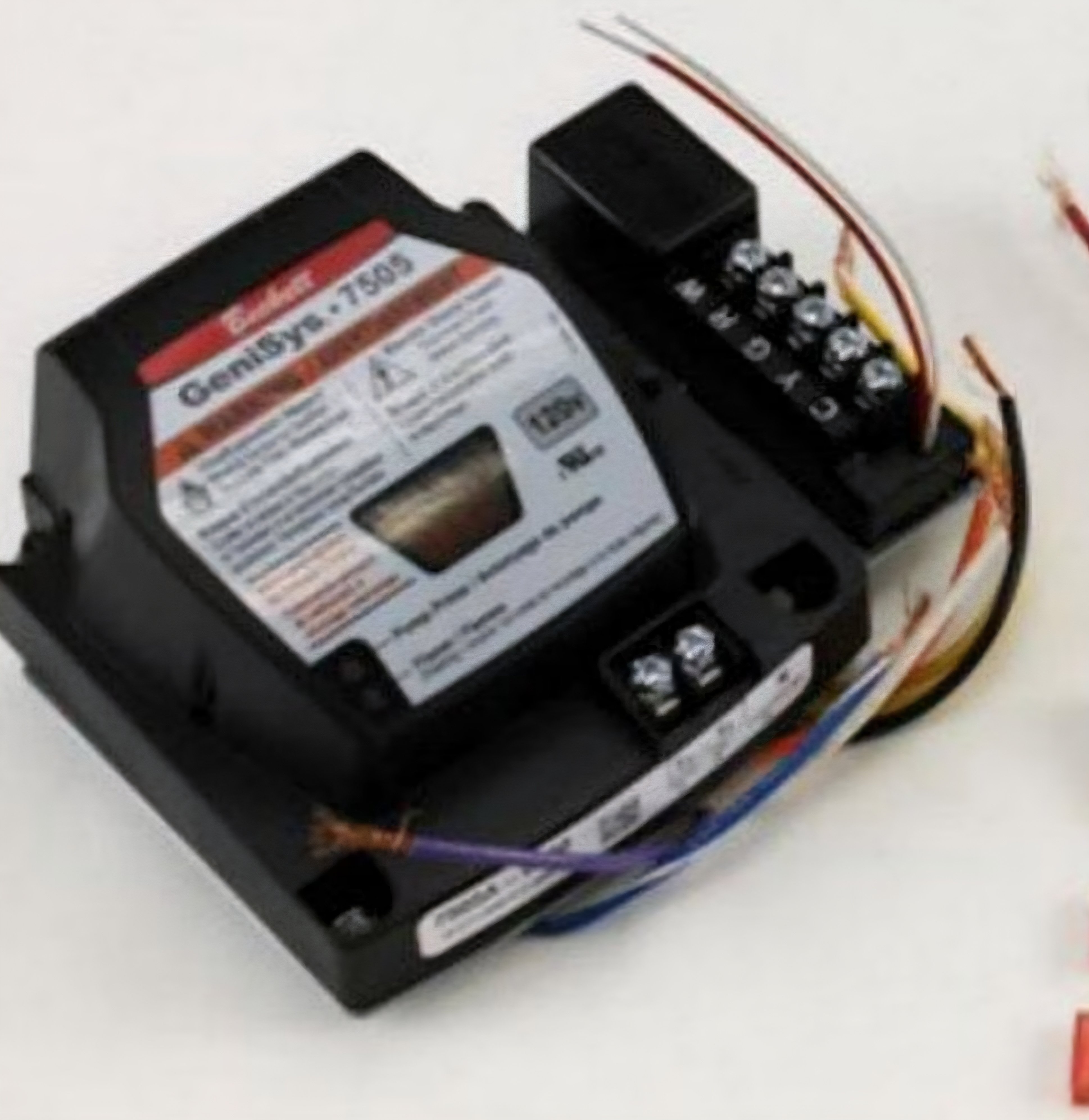
C,Y,G,R,W are the thermostat connections. Then there's R and W that also go to TT on the primary. That is controlled by the heat relay under the cover at the top of the terminal strip. That relay is bad. If that's your setup, you need a new Beckett AC Ready Kit. You can order it with or without the transformer. You dont need the transformer.
0 -
EdTheHeaterMan ---- Thanks for your advice!!.
As you surmised , my control card is the ST9103A type. Inspecting the card I noticed a slight discoloration around one resistor/capacitor.
Jumpering the R/W contacts on the card results immediate initiation of the burner ignition cycle. I then ran four system starts using the thermostat allowing about 5 minutes between each restart. On two attempts the ignition cycle started immediately after I heard the relay click in, on one attempt there was a noticeable 2 to 3 sec delay between the relay click and start of the ignition cycle and one attempt there was no relay click when the thermostat called for heat until I tapped the card to start the cycle,The discoloration on the control board suggests it may be the culprit for the intermittent failures. Is there a way to test the 24 volt circuit to and from the thermostat rule it out as the problem
		Thanks again,
		omec
0 -
yes. When you had the one time out of the 5 where there was no click, that is when you would use a very light touch with a jumper wire to connect R and W on the ST9103A to see if the thermostat is the problem (not a tap on the box). If the jumper wire starts the burner, the thermostat is the problem. If the very light touch with the jumper wire does not start the burner, then the problem is the ST9301A control board.
Edward Young Retired
After you make that expensive repair and you still have the same problem, What will you check next?
1 -
Same problem with two different thermostats. My guess from here is your ST9103A Electronic Fan Timer has a bad solder joint. Common solder joint failure locations are the relays and the connector for the wiring harness.
 National - U.S. Gas Boiler 45+ Years Old
Steam 300 SQ. FT. - EDR 347
One Pipe System0 -
Thanks for all your comments and suggestions.
I don't understand what jumping the R and W proves since jumping these contacts starts the burner regardless of what the thermostat is calling for. What should the voltage be across these terminals when the thermostat is calling for heat?
Anyways, the system now appears to be functioning properly over the last nine days without any burner initialization failures. T he Nest shows a heating profile consisting of a 45 minute to I hour morning heat up followed by 6 to 8, short 15 to 30 minute cycles to
maintain the temperature throughout the day. At this point, I think that I'll just get a spare control card to have on hand for emergency backup..0 -
" jumping the R and W proves since jumping these contacts starts the burner regardless of what the thermostat is calling for. "
An what if it does not start the burner ? Jumping the R and W, is a divide and conquer point providing troubleshooting direction.
24 VAC across R and W = No call for heat
Near 0 (zero) across R and W = Normal call for heat OR possibly no or low power to the thermostat circuit.
National - U.S. Gas Boiler 45+ Years Old
Steam 300 SQ. FT. - EDR 347
One Pipe System1 -
@OMEC asked: "I don't understand what jumping the R and W proves since jumping these contacts starts the burner regardless of what the thermostat is calling for. What should the voltage be across these terminals when the thermostat is calling for heat?"
Diagnosing a problem is a process of elimination.
- We know that tapping near the control will get the system to start
- We don't know why the control relay will not pull in and start the cycle
- If the thermostat is the weak link in the chain of events that starts the cycle, you can bypass the thermostat at the R and W on the control board on the furnace.
- you don't want to tap on the control while testing this theory because we know that tapping the control will start the cycle.
- We want to lightly jumper the R and W on the control to see if that starts the cycle.
- We want to replicate this more than once just in case you happen to tap the control while jumping the R and W
- If the control does start the cycle with a jump of W and R then you can start looking at how to solve a weak link in the thermostat circuit from the R on the control board thru the wires to the thermostat and back thru the wires to the W on the control board.
In order to answer the second part of your query I have 4 slides from the one day seminal on Electric for the HVAC tech.

This shows a circuit that has a 120 V Source but you can substitute any 24 volt source you want. The test results will be the same.
- The top left shows that when a switch (like a thermostat) is in the on position (like calling for heat) you can measure voltage at the load while operating
- The top right shows no voltage at the load when the switch is open.
Th opposite readings are found at the switch
- The bottom right shows no voltage at the switch (like the thermostat) when the load is operating and the switch is closed.
- The switch will show a potential difference in voltage when the switch is open (like the thermostat satisfied)
So to answer your question about the voltage at R and W on the control, it should read zero volts when the thermostat is calling for heat That is because the thermostat between R and W is closed making the completed circuit between R and W on the control just the same as if you placed a jumber wire across R and W on the control board.
Edward Young Retired
After you make that expensive repair and you still have the same problem, What will you check next?
0 -
To put the jumper test in perspective I have an illustration:

If the thermostat is the weak link and all the components on control card are strong, when you touch the R to W with a jumper, while the weak link thermostat is calling for heat, the burner will start. that is because the weak link was helped by the jumper completing the circuit for the thermostat that didn't quite make it this cycle.

If the thermostat is strong and you test the control card with the jumper, that extra bit of boost will not help the control start the burner. That is because the thermostat has already made the R to W connection and adding another additional connection will not make any difference.
That will place the weak link somewhere in the ST9103 control card. could ber a bad connection on the 9 pin Molex connector or a defective relay in the printed circuit board.
The bottom line is that replacing the ST9103 control will not fix the problem if the problem is at the thermostat. likewise replacing the thermostat when the ST9103 is the problem will not solve the problem. and to top it all off. if you replace both and you gind the problem still happens, then the Molex 9 pin connector may be the problem.
This is why we diagnose the problem before replacing any parts. because firing the parts cannon at the problem and still having the problem, you then call the professional who will cost more $$$ to start from scratch and figure out that the burner motor has a dead spot on it. (or something completely different than the thermostat or control. But at least you have all those nice new parts.)
Edward Young Retired
After you make that expensive repair and you still have the same problem, What will you check next?
0 -
Thanks again to everyone (especially TheHeaterMan) for your comments and guidance !!
Checked the voltages at the thermostat and furnace and get the following, R to ground 27.5v , R to C/W/G all 28v.
When the thermostat calls for heat the R to W voltage drops to 0.0.. Does this rule out the thermostat as the problem?
Ran through 5 start cycles and could not duplicate the burner initialization failures experienced last week. When the
thermostat calls for heat the ignition cycle starts immediately after the control card relay clicks in.
Is it possible that the relay on the control card was mechanically hanging up after sitting idle through the summer and now loosened up after a period of being exercised ? We turned the heat on in October, but it was only needed occasionally in the morning or late evening so the system did not get much of a workout until last week when I started to monitor/troubleshoot it. Now it's been working for over a week without any problems.
Personally, I don't trust the control card and feel that a spare emergency backup will be worth wile.omec
0 -
Having a spare control board is fine if that's what works for you.
National - U.S. Gas Boiler 45+ Years Old
Steam 300 SQ. FT. - EDR 347
One Pipe System0


Categories
- All Categories
- 87.8K THE MAIN WALL
- 3.3K A-C, Heat Pumps & Refrigeration
- 59 Biomass
- 430 Carbon Monoxide Awareness
- 133 Chimneys & Flues
- 2.2K Domestic Hot Water
- 6K Gas Heating
- 124 Geothermal
- 170 Indoor-Air Quality
- 3.8K Oil Heating
- 79 Pipe Deterioration
- 1.1K Plumbing
- 6.7K Radiant Heating
- 396 Solar
- 16.1K Strictly Steam
- 3.5K Thermostats and Controls
- 56 Water Quality
- 51 Industry Classes
- 51 Job Opportunities
- 18 Recall Announcements